COP-Blog 1: Nature-based Permanence
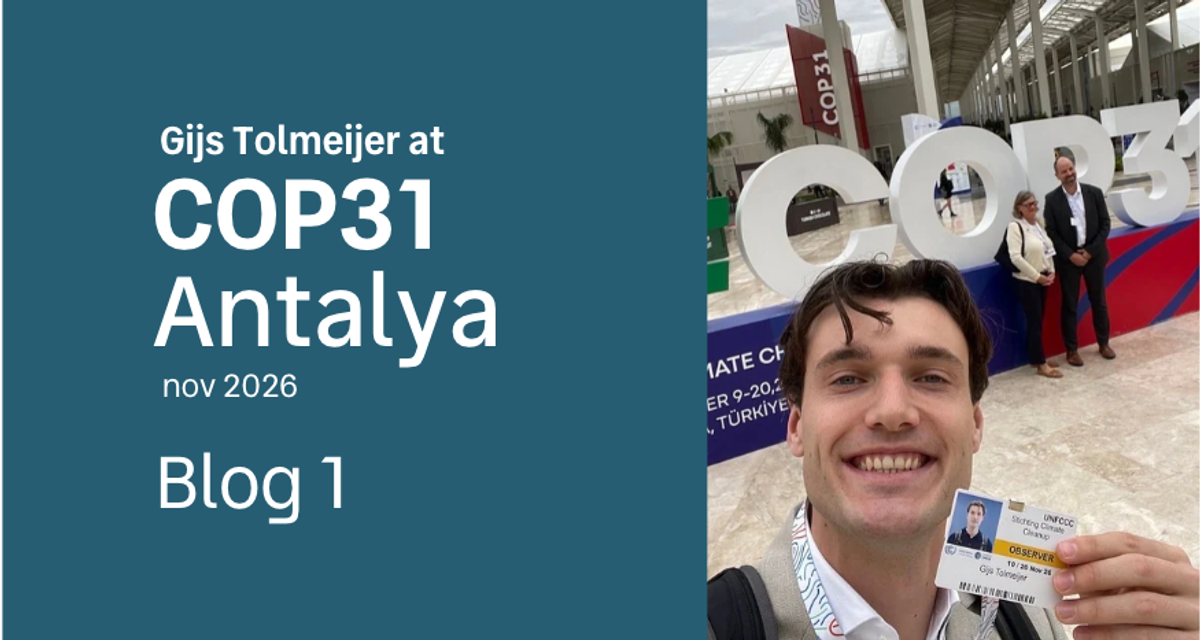
De markt voor koolstofvastlegging maakt een flinke groeispurt door. Waar een paar jaar geleden vooral pioniers experimenteerden met het vastleggen en certificeren van CO₂, groeit de sector nu uit tot een serieuze internationale markt. Daar hoort ook groeipijn bij. Methoden worden aangescherpt, standaarden ontwikkeld en overheden zoeken naar manieren om de markt verder te laten groeien. Dat die groei nodig is, blijkt uit het recente VN-rapport Limiting Overshoot. Volgens UNEP is het vrijwel onvermijdelijk dat de aarde de grens van 1,5°C opwarming tijdelijk overschrijdt. Om de temperatuur daarna weer te laten dalen, moeten we onze uitstoot drastisch verminderen én op grote schaal CO₂ uit de atmosfeer verwijderen. Tijdens COP31 in Antalya bezocht ik verschillende sessies over de toekomst van koolstofvastlegging. In vijf blogs deel ik de interessantste ontwikkelingen die ik daar tegenkwam. Te beginnen met een van de grootste uitdagingen voor natuurlijke koolstofvastlegging: permanentie.
English follows Dutch!
Een boom is geen kluis. Hoe houden we CO₂ langdurig opgeslagen?
Een boom kan honderden jaren CO₂ opslaan, maar kan ook morgen afbranden. Dat maakt natuurlijke koolstofvastlegging ingewikkeld. Bedrijven die carbon credits kopen, willen immers zekerheid dat de CO₂ waarvoor ze betalen daadwerkelijk uit de atmosfeer blijft. Bij bossen, landbouwbodems en andere natuurlijke oplossingen (Nature-based Solutions, of NbS) is die zekerheid niet altijd eenvoudig te geven. Tijdens COP31 bleek permanentie dan ook een van de belangrijkste onderwerpen in de discussie over de toekomst van natuurlijke koolstofmarkten.
Bij de sessie Investing in Nature-Based Carbon Credits on the Path to Net Zero, georganiseerd door WBCSD, spraken onder anderen vertegenwoordigers van ICVCM, Plan Vivo, Gold Standard en Taldi Harrison van de American Forest Foundation over deze uitdaging. Vooral de oplossing waar de American Forest Foundation aan werkt, vond ik interessant: de Permanence Trust.
Wat als we permanentie kunnen verzekeren?
Op dit moment proberen veel carbonstandaarden het risico dat opgeslagen CO₂ opnieuw vrijkomt af te dekken met bufferpools. Een deel van de uitgegeven carbon credits wordt apart gehouden. Als een bos afbrandt en daardoor CO₂ vrijkomt, worden credits uit de buffer gebruikt om dit verlies te compenseren. Maar wat als meerdere bossen tegelijk afbranden? Of als een project na dertig jaar afloopt, terwijl de CO₂ eigenlijk honderden jaren opgeslagen moet blijven?
De American Forest Foundation werkt daarom aan een ander model: de Permanence Trust. Het werkt in principe als een gezamenlijke verzekering voor koolstofopslag. Bij de verkoop van carbon credits wordt een financiële bijdrage betaald, afhankelijk van het risico dat de opgeslagen CO₂ in de toekomst weer vrijkomt. Dit geld komt in een gezamenlijk fonds terecht en wordt geïnvesteerd, zodat er ook over tientallen of honderden jaren middelen beschikbaar zijn.
Met dat geld kan het fonds verschillende dingen doen. Het kan investeren in brandpreventie of beter bosbeheer, langdurig monitoren hoeveel CO₂ nog opgeslagen is en ingrijpen wanneer opslag verloren gaat. Als een bos toch afbrandt, kan het fonds nieuwe carbon credits kopen om het verlies te compenseren. Het uiteindelijke doel is om tijdelijke opslag waar nodig te vervangen door permanente, bijvoorbeeld geologische, koolstofopslag. Zo hoeft een individuele boom geen honderden jaren te overleven, zolang het systeem ervoor zorgt dat de beloofde hoeveelheid CO₂ gedurende die periode uit de atmosfeer blijft.
De American Forest Foundation heeft al een kleinere versie hiervan opgezet, het Permanence Fund, voor haar eigen bosprojecten. De grotere Permanence Trust, die voor verschillende soorten carbon credits zou kunnen werken, is nog in ontwikkeling. Of het model ook op grote schaal financieel houdbaar is, moet dus nog blijken.
Waarom dit weleens een doorbraak kan worden
Deze ontwikkeling is extra interessant vanwege de mogelijke integratie van carbon removals in het Europese emissiehandelssysteem (EU ETS). De Europese Commissie heeft in 2026 voorstellen gedaan om vraag naar permanente koolstofverwijdering te creëren binnen het ETS. Daarmee ontstaat mogelijk een enorme nieuwe markt. Als bedrijven weten dat er over tien of twintig jaar nog steeds vraag is naar hun certificaten, wordt het veel aantrekkelijker om vandaag te investeren in nieuwe projecten.
Voorlopig richt het Europese voorstel zich op technologieën zoals BioCCS en DACCS, waarbij CO₂ langdurig ondergronds wordt opgeslagen. Natuurlijke koolstofvastlegging valt daar nog buiten, voornamelijk vanwege de onzekerheid over permanentie. En dat is jammer, want bossen en bodems kunnen relatief snel CO₂ vastleggen en leveren tegelijkertijd voordelen op voor biodiversiteit, waterbeheer en klimaatadaptatie.
De vraag is dus of we permanentie anders kunnen organiseren. Het concept contracted durability gaat precies hierover: met contracten, financiële garanties en compensatieverplichtingen zorgen dat een ton CO₂ gedurende een afgesproken periode uit de atmosfeer blijft, ook wanneer de oorspronkelijke opslag verloren gaat. Daarmee wordt permanentie steeds meer iets wat je op systeemniveau kunt organiseren.
En wat als systeemverandering óók permanentie is?
Tijdens de sessies moest ik ook denken aan een andere vorm van permanentie. Stel dat inkomsten uit carbon credits ervoor zorgen dat boeren structureel overstappen op agroforestry, dat bouwbedrijven biobased materialen als standaard gaan gebruiken of dat een regio zijn bosbeheer blijvend verandert. Dan kan de oorspronkelijke CO₂-opslag misschien tijdelijk zijn, maar de verandering in de manier waarop we landbouw bedrijven, bouwen of onze natuur beheren veel langer doorwerken.
Natuurlijk is dat geen garantie dat een specifieke ton CO₂ honderden jaren opgeslagen blijft. Maar als een carbonproject een blijvende verandering in gang zet, waardoor ook toekomstige generaties CO₂ blijven vastleggen, heeft dat wel degelijk een langdurig klimaateffect.
Zouden we daarom bij het beoordelen van permanentie ook moeten kijken naar de blijvende systeemverandering die een project teweegbrengt, in plaats van uitsluitend naar hoe lang de oorspronkelijke ton CO₂ opgeslagen blijft?
Die systeemverandering, los van het officiële permanentievraagstuk, is precies drijfveer voor mijzelf en de rest van het Oncra-team om de koolstoffinanciering tot een succes te maken.
English translation
The carbon removal market is going through a major growth spurt. Just a few years ago, it was mainly pioneers experimenting with capturing, storing and certifying CO₂. Today, the sector is growing into a serious international market. And with growth comes growing pains. Methodologies are being refined, standards are being developed, and governments are looking for ways to help the market expand further.
The need for this growth is clear from the recent UN report Limiting Overshoot. According to UNEP, temporarily exceeding the 1.5°C warming threshold is now virtually unavoidable. To bring global temperatures back down, we need to drastically reduce emissions and remove CO₂ from the atmosphere at a massive scale.
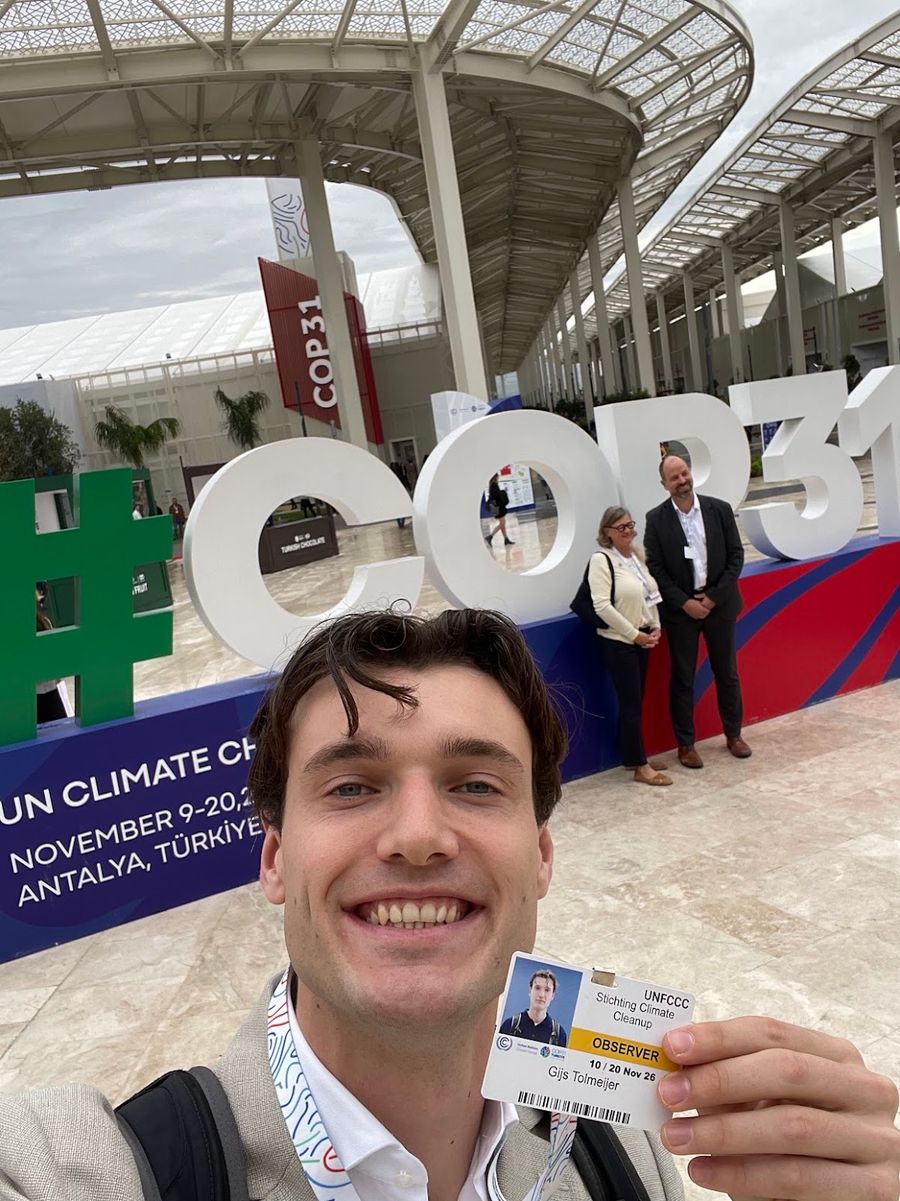
During COP31 in Antalya, I attended several sessions on the future of carbon removal. In five blogs, I'll share some of the most interesting developments I came across. Starting with one of the biggest challenges for nature-based carbon removal: permanence.
A tree is not a vault. How do we keep CO₂ stored for the long term?
A tree can store CO₂ for hundreds of years, but it could also burn down tomorrow. That's what makes nature-based carbon removal complicated. Companies buying carbon credits want assurance that the CO₂ they're paying for actually stays out of the atmosphere. With forests, agricultural soils and other Nature-based Solutions (NbS), providing that certainty isn't always straightforward. At COP31, permanence turned out to be one of the central topics in discussions about the future of nature-based carbon markets.
At the session Investing in Nature-Based Carbon Credits on the Path to Net Zero, organised by WBCSD, representatives from ICVCM, Plan Vivo and Gold Standard, along with Taldi Harrison from the American Forest Foundation, discussed this challenge. One solution I found particularly interesting was the Permanence Trust, which the American Forest Foundation is developing.
What if we could insure permanence?
Currently, many carbon standards address the risk of stored CO₂ being released back into the atmosphere through buffer pools. A portion of the carbon credits issued is set aside. If a forest burns down and releases CO₂, credits from the buffer are used to compensate for the loss. But what happens if several forests burn down at the same time? Or if a project ends after thirty years, while the CO₂ is supposed to remain stored for hundreds of years?
The American Forest Foundation is developing a different approach: the Permanence Trust. In principle, it works like a collective insurance system for carbon storage. When carbon credits are sold, a financial contribution is made based on the risk of the stored CO₂ being released in the future. This money goes into a shared fund and is invested, ensuring that resources remain available for decades or even centuries.
The fund can use this money in several ways. It can invest in fire prevention or better forest management, monitor carbon storage over the long term, and intervene when stored carbon is lost. If a forest does burn down, the fund can purchase new carbon credits to compensate for the loss. The ultimate goal is to replace temporary storage with permanent storage, such as geological carbon storage, where necessary. This means that an individual tree doesn't need to survive for hundreds of years, as long as the system ensures that the promised amount of CO₂ remains out of the atmosphere for that period.
The American Forest Foundation has already established a smaller version of this approach, the Permanence Fund, for its own forest projects. The larger Permanence Trust, which could work across different types of carbon credits, is still under development. Whether the model will prove financially sustainable at scale remains to be seen.
Why this could be a breakthrough
This development is particularly interesting given the potential integration of carbon removals into the European Union Emissions Trading System (EU ETS). In 2026, the European Commission proposed measures to create demand for permanent carbon removals within the ETS. This could open up a huge new market. If companies know there will still be demand for their certificates in ten or twenty years, investing in new projects today becomes much more attractive.
For now, the European proposal focuses on technologies such as BioCCS and DACCS, which capture CO₂ and store it underground for the long term. Nature-based carbon removal is not yet included, mainly because of uncertainty around permanence. And that's a shame, because forests and soils can remove CO₂ relatively quickly while also delivering benefits for biodiversity, water management and climate adaptation.
The question, then, is whether we can organise permanence differently. The concept of contracted durability addresses exactly this: using contracts, financial guarantees and compensation obligations to ensure that a tonne of CO₂ stays out of the atmosphere for an agreed period, even if the original storage is lost. In this way, permanence increasingly becomes something that can be organised at a system level.
And what if systemic change is also a form of permanence?
During the sessions, I started thinking about another form of permanence. Imagine that revenue from carbon credits enables farmers to permanently switch to agroforestry, construction companies to adopt bio-based materials as standard practice, or an entire region to fundamentally change how its forests are managed. The original carbon storage may be temporary, but the changes in how we farm, build and manage nature could last much longer.
Of course, this doesn't guarantee that a specific tonne of CO₂ will remain stored for hundreds of years. But if a carbon project sets lasting change in motion, enabling future generations to continue removing and storing CO₂, it can still have a long-term climate impact.
Should we therefore also consider the lasting systemic changes a project creates when assessing permanence, rather than looking exclusively at how long the original tonne of CO₂ remains stored?
This kind of systemic change, beyond the formal requirements of permanence, is exactly what motivates me and the rest of the Oncra team to make carbon finance a success.